RESPECT THE WILDLIFE - DO NOT FEED OR DISTURB.
Wildlife
Banff National Park is home to a wide variety of wildlife, including elk, grizzly and black bears, moose and wolves. It’s also the residence of smaller creatures, like hoary marmots, pikas and Columbian ground squirrels, and to a host of birds, from bald eagles to the endangered harlequin ducks. The slower tourist season such as fall tend to be the best time to spot wild animals in their natural habitats. Be sure to look out for the following during your ride. It is very important to keep from dropping garbage or food (like banana peels) along the route.
Elk
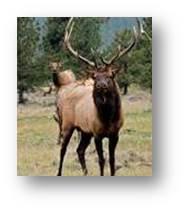 Banff has a robust elk population numbering in the thousands. The Town of Banff is frequented by elk intent on eating the greenery out of local's backyards and escaping the predators they would face anywhere else in the park.
- Second largest in size of the deer family (largest being Moose)
- Have very thick bodies, long legs, a mane on the neck, short tail
- Males have heavy large antlers which they shed annually. Females have no antlers
- Can weigh anywhere from 700 to 1,000 lbs (males) and 500-600 lbs (females)
- Usually found at an altitude of 2,500 to 8,000 ft
Black Bear
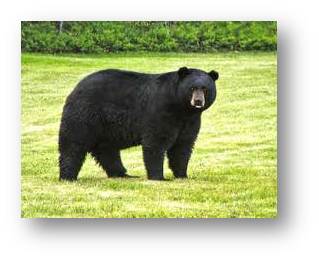
Black bears typically live in forests and are excellent tree climbers. Despite their name, the colour of their fur comes in a range of shades, from blue-black to brown, to cinnamon or even cream.
- Weighs from 250-300 lbs
- They are excellent tree climbers and swimmers
- In the summer they eat grubs, ants, berries and vegetation
- View video on how to use bear spray
Grizzly Bear
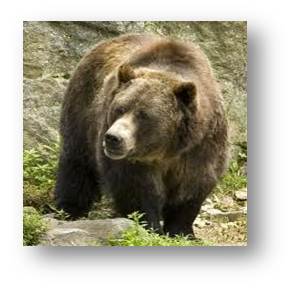
The grizzly bear population is considered to be a threatened species in Banff National Park. Grizzlies can be distinguished from black bears by the large hump of muscle on their shoulders and from the shape of their face: grizzlies have very broad round faces, while black bears have narrow profiles much like a dog’s face.
- Males can weigh 500-600 lbs
- Their fur are various shades of goldish brown colour
- The claws of a grizzly are very long (between 4-10 cm) and are clearly visible on tracks
- View video on how to use bear spray
Cougar
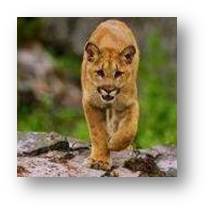
The Rocky Mountain Cougar is the largest of the North American cougar family. They hunt elk, deer and mountain sheep. They are very alert, wary, and hard to spot.
- Males weigh around 160 lbs. Females weigh around 120 lbs
- Females with cubs tend to stay near their home, which are usually caves or nests
- If you encounter a cougar, retreat slowly. Do not run or play dead
Bighorn Sheep
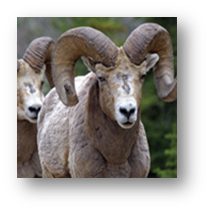
Although they are shy and elusive, Banff has an abundant sheep population, and can be commonly spotted. They are known for their spiral horns, which the mature males use to fight for the females.
- Males can weigh 200-340 lbs. The females are 10-15% smaller
- They are excellent mountain climbers due to the spongy centre of their hooves and hard rims
- During the summer, they live on the grassy slopes above the treelines at higher elevations
Balancing wildlife conservation and the protection of habitat against the curiosity of visitors wanting to get a close look at the wildlife is a real challenge. Some of the best places to observe wildlife and birds within their native habitat while remaining unobtrusive and at a safe distance include:
- Vermilion Lakes Drive
- Minnewanka Loop
- Norquay Road
- Marsh Boardwalk Trail at the Cave and Basin Historic Site
- Bow Valley Parkway (Highway 1A)
- Icefields Parkway
- Hiking anywhere in Banff National Park
WARNING: Do not approach the animals when encountering one on course. Stay back at least 100 metres from bears and 30 metres from ungulates.


Thanks for Riding in 2016!
